
All About Iberian Ham, Spain’s Iconic Gourmet Food
Spain’s greatest contribution to the world’s food may be jamón ibérico, the salted, cured ham made from the Iberian pig. This is the delicacy par excellence of Spanish cuisine, beloved in Spain and abroad, sliced razor-thin by hand and presented on fractal platters, meltingly tender. Many consider Iberian ham to be the world’s greatest ham. But Iberian ham differs from other ham. Why is it different from other ham? Is it the Iberian breed of pig? The pig’s diet? The curing process? The lack of additives? Let’s look more closely at the process of making jamón ibérico to find some answers.
The Iberian Pig and its Habitat
Jamón Ibérico (Iberian ham) is made from the Iberian pig. This is a historic breed of pig native to the Iberian Peninsula that thrives in the open country of parts of Spain and Portugal. The breed is thought to have come from a cross between domesticated pigs and wild boars. These dark-colored creatures are adapted to their preferred environment: the dehesa, a hilly, dry biome dotted with Mediterranean oak trees. The pigs roam freely on this land, climbing through hills and valleys and foraging on plants and herbs and the acorns of the Holm Oak tree as well as other kinds of oak trees. These acorns turn out to be central to the story of Iberian pork and Iberian ham specifically.
The Acorn Diet
Breed, habitat and diet combine to make Iberian pork a unique meat. Released into the dehesa, the Iberian pigs gorge themselves on fatty acorns, gaining a huge amount of weight. The added fat infuses itself into the muscle of the pig, making for perfect marbling. Additionally, the high content of unsaturated fat in the acorns, particularly oleic acid, affects the fat composition in the pig’s body and in the final cured ham.
Top quality Iberian ham comes from pigs that are 100% Iberian (genealogy and genetic tests are important here) and spend their final months roaming acorn-filled forests and hills. This is the famous pata negra ham (so named because of the Iberian pig’s characteristic black hoof), today denoted with a black tag on the ham and fetching astronomical prices. Each pig requires acres of space to roam and eat, so enormous tracts of dehesa woodland are needed to produce any quantity of the top-quality ham.
How Iberian Ham Is Made
Once the black pigs have fattened themselves on acorns, it’s ham-making season. The pigs are slaughtered. Every part has a purpose. Fresh cuts of Iberian meat like secreto and presa are sought-after delicacies for their subtle flavor, less noble cuts make their way into dry-cured sausages like Iberian chorizo and salami-like salchichón. The legs start their journey towards becoming Iberian hams. Jamón Ibérico is made from the fatty, meaty back legs of the pig, while the leaner, smaller front legs become paleta through the same production process.
Iberian ham-making is stupendously traditional. The fresh legs are completely covered in heaps of sea salt and left for a few weeks to allow the salt to draw the liquid out of the meat. The salt, of course, is responsible for preserving the meat. Once salted, the hams are washed to remove the salt from the surface and hung to dry, first for a period of months and then for aging that can last years. As the ham ages and dries, a complex flavor develops.
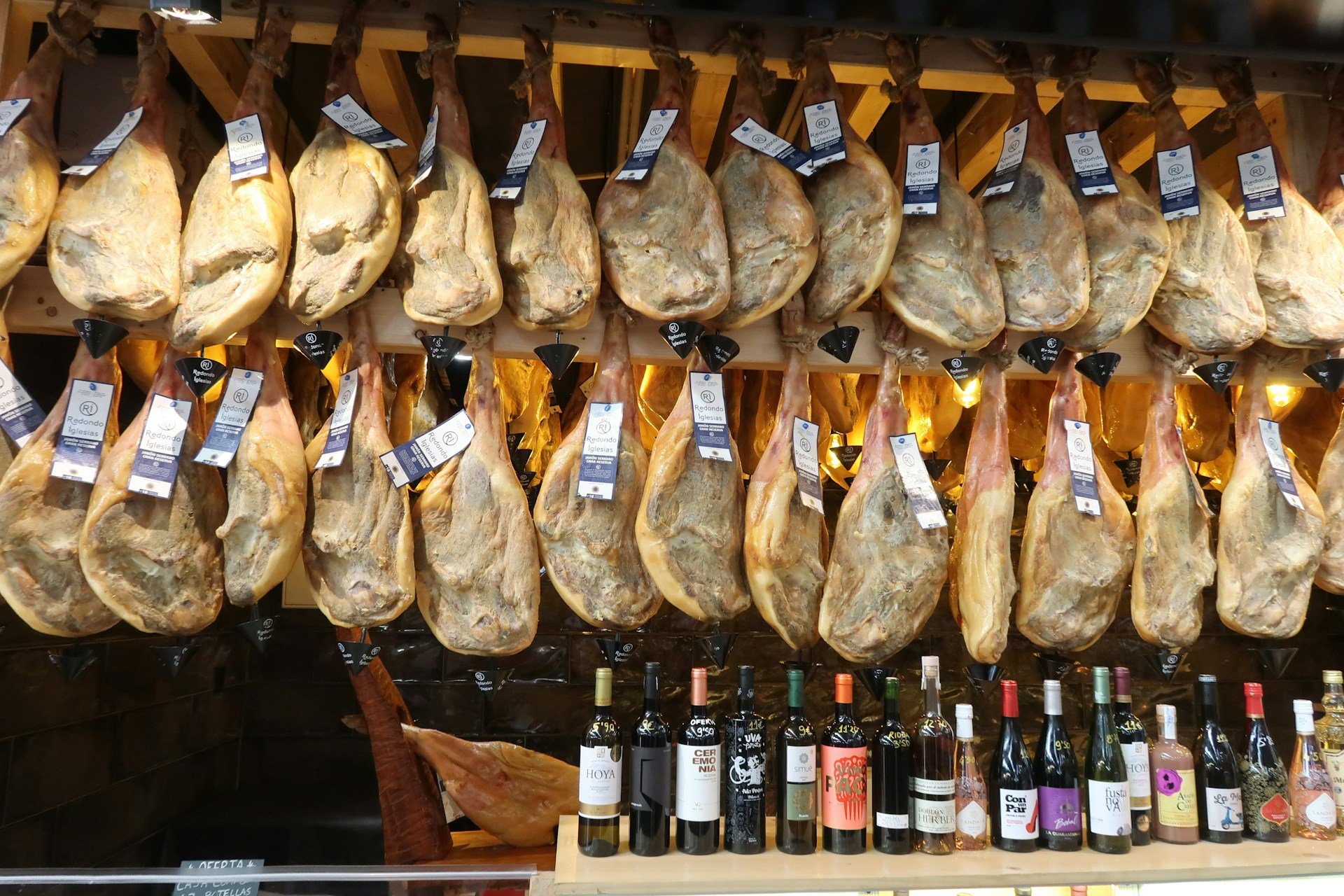
Once cured, the ham is ready for consumption. Unlike many hams made in other parts of the world, jamón ibérico is not cooked, instead being preserved by the salting and drying process. This makes it one of the most natural and simple cured meats available, pure free-range meat and salt. In Spain, bars and restaurants leave the black-hoofed hams hanging from the rafters, bringing them down as needed to be hand cut into slices on demand.
Healthy Fat in Iberian Ham
The Iberian pig has a tendency to accumulate a large amount of body fat. The composition of this fat, however, is unusual. Analyses of Iberian pig fat show that it is unusually high in monounsaturated fat, especially oleic acid, the fatty acid known for being the main component of olive oil. When the Iberian pig eats acorns (themselves high in oleic acid) it accumulates the highest levels of this unsaturated fat. The fat of acorn-fed Iberian ham can have higher levels of oleic acid than many vegetable oils and substantially more than other animal fats.
Iberian Ham and Cardiovascular Health
The Spanish have studied the effects of consuming Iberian ham in the context of the broader interest in the Mediterranean diet. The conclusions are far from clear, but there are indications that consuming jamón ibérico can have beneficial effects on cardiovascular health despite being, in the end, a cured meat. The high oleic acid levels are thought to be responsible for the ham’s healthy characteristics. Oleic acid (along with polyphenols and other compounds) may be responsible for the health benefits of extra virgin olive oil; the similar fat composition of Iberian ham may have similar health benefits.
Iberian Ham and Salt
What about all that salt? The fresh Iberian hams are, after all, virtually buried in salt for weeks. It turns out, however, that the combination of the Iberian pig’s fat and muscle distribution and the dry-curing process result in a ham that’s less salty than many other types of ham.
Iberian Ham and Curing Salts
And what about nitrates and nitrites, the antimicrobial curing salts used in many processed meats? Some ham producers do use these, in small and highly regulated quantities. But jamón ibérico is generally produced by artisan charcuterie masters at small scale. These producers often do not use curing salts at all, instead using the traditional salting process and careful quality control. Even a titan of ham production like Joselito, the most notable ham house in the Salamanca area, produces hams with only two ingredients: Iberian pork and salt.
Iberian Ham and The Spanish Diet
A little Iberian ham goes a long way, so consider eating it as the Spanish do: a platter to share to get your appetite up (works every time!), or a wonderfully simple combination such as with fried eggs and potatoes (huevos estrellados), fresh or preserved artichokes, or on a slice of olive-oil drizzled pan con tomate (bread with tomato and olive oil).